
India’s Free Trade Agreements
International spice importers looking to cut costs should pay attention to India’s expanding network of free trade agreements. These FTA tariff reductions India has negotiated can significantly lower your spice importers landed cost through reduced duties and faster customs clearance.
This guide is for spice trading companies, importers, and procurement managers who want to understand how India free trade agreements create real savings opportunities. Whether you’re sourcing turmeric from Kerala or cardamom from Karnataka, knowing these trade rules can boost your bottom line.
We’ll walk through India’s key bilateral trade agreements spices benefit from, including partnerships with ASEAN, Japan, and South Korea. You’ll learn how rules of origin spice trade requirements work and why they matter for your cost calculations. We’ll also break down the streamlined customs procedures spice imports enjoy under these agreements, plus show you practical methods for FTA cost savings calculation to measure your actual landed cost reductions.
Understanding India’s Free Trade Agreement Network for Spice Exporters
Major FTA Partners and Their Spice Import Volumes
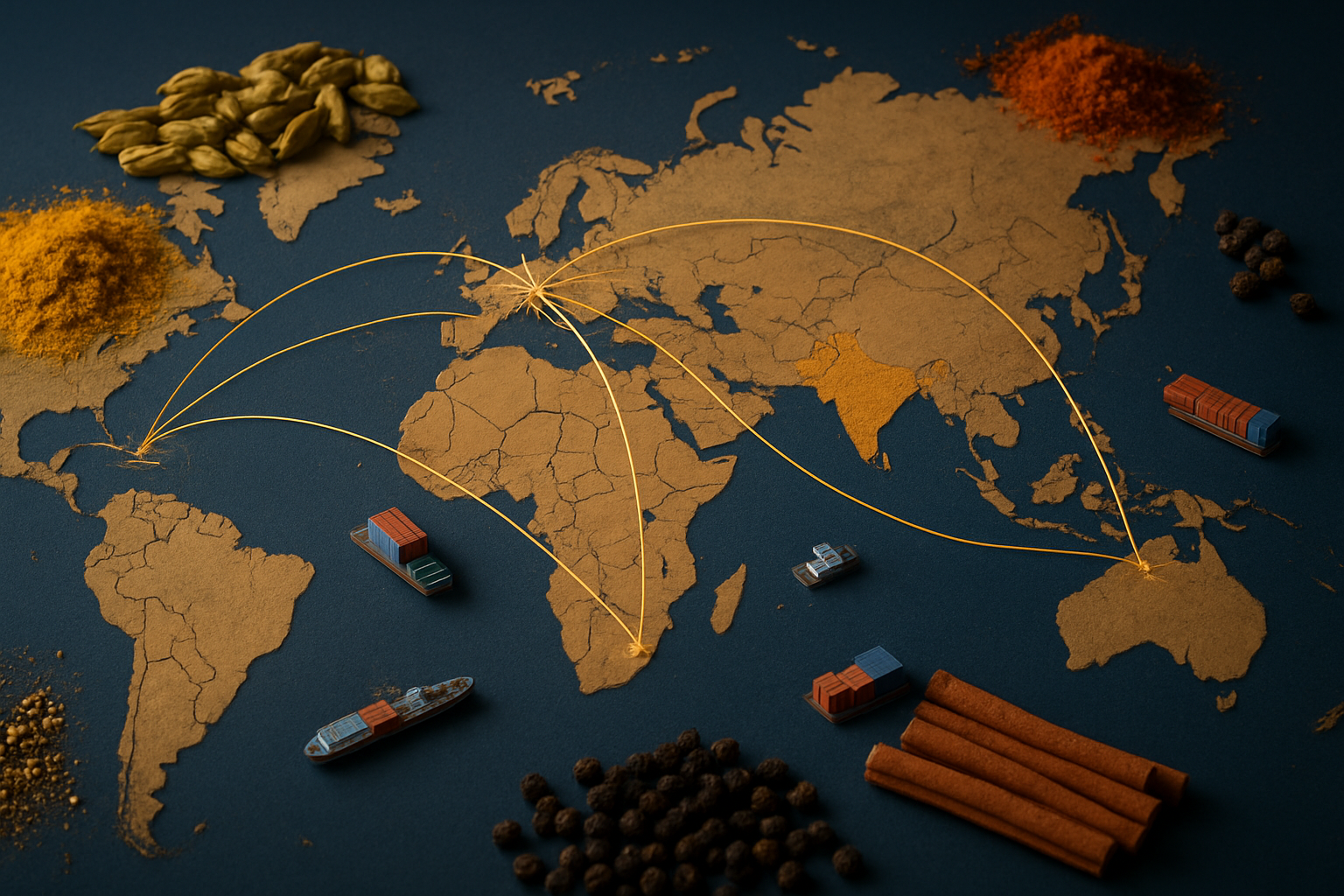
India has built an extensive network of India free trade agreements that create significant opportunities for spice exporters worldwide. The ASEAN-India Free Trade Area stands as the largest partnership, with member countries importing over $2.8 billion worth of Indian spices annually. Singapore and Malaysia lead this group, with Singapore alone importing approximately 180,000 metric tons of various spices each year.
The UAE emerges as another crucial partner through the India-UAE Comprehensive Economic Partnership Agreement (CEPA), which came into effect in 2022. The UAE imports nearly $450 million worth of Indian spices annually, making it a gateway for re-exports to other Middle Eastern and African markets.
South Korea, under the India-Korea Comprehensive Economic Partnership Agreement, imports substantial quantities of red chili, turmeric, and coriander. The country’s spice imports from India reached $89 million in the last fiscal year, with steady growth projected due to increasing demand for Indian cuisine.
Other significant FTA partners include:
- Japan: $156 million in annual spice imports, focusing on premium quality products
- Chile: $23 million, primarily in cumin and coriander
- Mauritius: $18 million, serving as a hub for African market penetration
Key Provisions That Benefit Spice Trade
India spice export benefits under various FTAs include preferential tariff rates that can reduce import duties by 50-100% for qualifying products. The ASEAN-India FTA offers zero tariff rates for most spice categories, while the India-UAE CEPA provides immediate duty elimination for 80% of spice products.
Certificate of Origin requirements vary across agreements but generally require 35-40% value addition in India for spices to qualify for preferential treatment. This threshold accommodates the reality that many spices undergo processing, grinding, and packaging operations that add substantial value.
Trade facilitation measures include:
- Simplified documentation requirements
- Electronic certificate processing
- Mutual recognition of testing standards
- Fast-track customs clearance for pre-approved exporters
The customs procedures spice imports have been streamlined significantly under these agreements. Risk management systems allow low-risk consignments to clear customs within 24 hours, compared to traditional processing times of 3-5 days.
Tariff Elimination Schedules for Different Spice Categories
FTA tariff reductions India follows specific timelines based on spice categories and sensitivity levels. Whole spices like cardamom, black pepper, and cloves typically receive immediate duty elimination under most FTAs due to their high export value and limited domestic production in partner countries.
| Spice Category | ASEAN-India FTA | India-UAE CEPA | India-Korea CEPA |
|---|---|---|---|
| Cardamom (whole) | 0% (immediate) | 0% (immediate) | 5% reduction annually |
| Turmeric powder | 0% (immediate) | 0% (immediate) | 0% (immediate) |
| Red chili powder | 5% (year 3) | 0% (immediate) | 5% (year 2) |
| Cumin seeds | 0% (immediate) | 0% (immediate) | 0% (immediate) |
| Coriander seeds | 0% (immediate) | 0% (immediate) | 3% (year 2) |
Ground and processed spices often follow longer phase-out schedules to protect domestic processing industries in importing countries. For instance, under the India-Korea CEPA, processed spice blends face a 5-year tariff elimination schedule, starting with 50% reduction in year one.
The spice import duty reduction creates substantial cost savings. Before the India-UAE CEPA, cardamom faced 5% import duty in the UAE. With the agreement, this duty dropped to zero, saving importers approximately $225 per metric ton. Similar savings apply across different spice categories, with cumulative benefits reaching thousands of dollars per shipment for large-volume importers.
Direct Tariff Reductions Through India’s FTA Framework
Zero-duty access to premium markets like Japan and South Korea
India’s Comprehensive Economic Partnership Agreement (CEPA) with Japan and Korea Free Trade Agreement open remarkable opportunities for spice importers looking to reduce their landed costs. These agreements eliminate import duties on hundreds of spice categories, creating direct cost savings that can transform profit margins.
Japanese markets particularly benefit spice importers through the India-Japan CEPA, which provides zero-duty access for products like turmeric, cumin, coriander, and cardamom. Before this agreement, Japanese importers faced duties ranging from 3.2% to 8.5% on Indian spices. Now, qualifying shipments enter Japan duty-free, translating to immediate cost reductions of thousands of dollars per container.
South Korea’s FTA with India offers similar advantages. Korean importers of Indian black pepper, red chili powder, and garam masala blends now enjoy zero tariffs instead of the previous 8% duty rate. A single 20-foot container of premium Indian spices worth $50,000 saves approximately $4,000 in duties alone.
The qualification process requires proper documentation and adherence to rules of origin, but the savings justify the compliance effort. Smart importers work closely with Indian suppliers to ensure products meet origin requirements, securing these valuable duty eliminations that directly improve their bottom line.
Preferential rates under ASEAN and SAFTA agreements
The ASEAN-India Trade in Goods Agreement and South Asian Free Trade Area (SAFTA) create preferential tariff structures that significantly reduce spice import costs across multiple markets. These regional agreements establish tiered duty reductions that benefit both large-scale importers and smaller specialty spice businesses.
Under the ASEAN framework, countries like Thailand, Malaysia, and Singapore offer reduced duties on Indian spices ranging from 30% to 70% below normal tariff rates. Thai importers, for example, pay only 2.1% duty on Indian cardamom instead of the standard 7% rate applied to non-FTA countries. Malaysian spice importers benefit from similar reductions, with duties on turmeric powder dropping from 15% to 4.5%.
SAFTA provides even more dramatic savings for regional trade. Bangladesh, Sri Lanka, and Maldives importers access Indian spices at preferential rates that can be up to 90% lower than standard tariffs. Sri Lankan importers of Indian cinnamon and curry powder enjoy duties as low as 0.5%, compared to 25% for non-SAFTA suppliers.
These preferential rates apply automatically once proper certificates of origin are obtained. The cumulative effect means importers can source diverse spice portfolios from India while maintaining competitive pricing in their domestic markets.
Graduated tariff cuts saving importers thousands annually
India’s FTA framework implements graduated tariff reduction schedules that create escalating savings over time. These phased approaches mean importers who establish long-term sourcing relationships with Indian suppliers benefit from progressively deeper cost reductions.
The India-ASEAN agreement follows a 10-year tariff elimination schedule, with duties decreasing by specific percentages annually. Spice categories that started with 10% reductions in year one now enjoy 50-75% cuts, with complete elimination scheduled by 2025. Vietnamese importers of Indian black pepper have watched their duty burden drop from 20% to 8% over the agreement’s timeline.
Bilateral agreements with individual countries often feature even more aggressive reduction schedules. The India-Chile Preferential Trade Agreement reduced spice tariffs by 50% immediately upon implementation, with additional cuts every two years. Chilean importers now pay just 2% duty on Indian cumin seeds, down from the original 8% rate.
Annual savings calculations show remarkable results. A mid-sized spice importer bringing in $200,000 worth of Indian spices annually can save $8,000-$15,000 in duties depending on their product mix and destination markets. Large-scale operations importing multiple containers monthly report six-figure annual savings through strategic FTA utilization.
These graduated cuts reward importers who commit to Indian suppliers early in the reduction cycle, allowing them to build market share while competitors face higher duty burdens from alternative origins.
Rules of Origin Requirements That Maximize Cost Benefits

Meeting origin criteria for Indian spices and blends
India’s free trade agreements come with specific origin requirements that determine which spice products qualify for reduced duties. Understanding these criteria makes the difference between paying full import tariffs and securing significant cost savings.
Most India bilateral trade agreements spices require at least 35% of the product’s value to originate in India. For whole spices like cardamom, black pepper, or turmeric, meeting this threshold is straightforward since they’re grown and harvested domestically. Processed items like spice blends or value-added products need careful attention to their composition and processing locations.
The key lies in demonstrating substantial transformation within India. Simply packaging foreign spices in India won’t cut it. The processing must change the product’s classification under the Harmonized System codes. For example, grinding whole spices into powder or creating custom spice blends qualifies as substantial transformation.
Mixed spice products present unique opportunities and challenges. A curry powder containing 60% Indian turmeric, coriander, and red chili with 40% imported cumin still qualifies if the final blending and packaging occur in India. Smart spice exporters structure their supply chains to maximize Indian content while maintaining competitive pricing.
Regional cumulation rules in certain FTAs allow content from partner countries to count toward origin requirements. Under the India-ASEAN agreement, Thai lemongrass processed with Indian spices can still qualify for preferential treatment when exported to other member nations.
Documentation processes for claiming FTA benefits
Securing FTA cost savings calculation benefits requires precise documentation that proves your spices meet origin requirements. The paperwork might seem daunting, but standardizing your documentation process creates smooth customs clearance and predictable landed costs.
The Certificate of Origin serves as your primary weapon for claiming tariff reductions. Indian exporters must obtain this document from authorized agencies like the Export Inspection Council or designated Chambers of Commerce. Each FTA has specific certificate formats – the India-Korea agreement uses different forms than the India-Japan partnership.
Supporting documentation strengthens your claims and reduces audit risks. Purchase invoices showing raw material sources, production records detailing processing steps, and shipping documents tracking the supply chain all contribute to bulletproof documentation packages. Many importers maintain digital archives for quick access during customs inspections.
Self-certification options exist under newer agreements like the India-UAE Comprehensive Economic Partnership Agreement. Registered exporters can issue their own origin declarations, dramatically reducing processing time and administrative costs. This system requires pre-approval but streamlines ongoing shipments once established.
| Document Type | Purpose | Validity Period | Issuing Authority |
|---|---|---|---|
| Certificate of Origin | Proves product eligibility | 12 months | Export Inspection Council |
| Invoice Declaration | Self-certification option | Per shipment | Registered Exporter |
| Production Certificate | Verifies processing location | 24 months | Manufacturer |
Smart importers establish relationships with compliant Indian suppliers who maintain robust documentation systems. This partnership approach reduces delays and ensures consistent access to preferential tariffs across multiple shipments.
Value addition thresholds that qualify for reduced duties
Different agreements set varying value addition requirements that directly impact your ability to claim FTA tariff reductions India. Understanding these thresholds helps structure sourcing strategies that maximize duty savings while maintaining product quality and competitive pricing.
The 35% value addition rule applies to most Indian FTAs, but calculation methods vary significantly. Some agreements use FOB (Free on Board) pricing as the baseline, while others reference ex-works values. The India-MERCOSUR agreement allows certain flexibilities for developing country producers that can benefit spice processors.
Labor-intensive processes like hand-sorting, traditional grinding, or artisanal blending contribute substantially to value addition calculations. Indian spice processors leverage these traditional methods not just for quality but to meet FTA thresholds. A facility that hand-sorts cardamom pods before packaging adds significant local value beyond simple repackaging operations.
Equipment depreciation, facility costs, and quality control expenses all count toward value addition when properly documented. Smart processors maintain detailed cost accounting that separates Indian activities from any imported inputs. This granular tracking proves essential during origin audits or disputes.
Raw material costs present both challenges and opportunities. When global spice prices fluctuate, the percentage of Indian value addition changes automatically. Processors monitor these ratios closely and adjust sourcing patterns to maintain FTA compliance. Some facilities maintain buffer capacity to increase local processing when import costs spike.
Strategic blending creates additional value while meeting origin requirements. Combining premium Indian varieties with standard grades produces differentiated products that command higher margins while easily clearing value addition thresholds. This approach works particularly well for custom spice blends targeting specific international markets.
Value addition calculations must account for all production stages within India. Transportation between Indian facilities, intermediate storage, and final packaging all contribute to local content. Multi-stage processing operations often exceed minimum thresholds by substantial margins, providing cushion against fluctuating input costs or regulatory changes.
Si buscan una buena casa de apuestas, Caliente es la onda. Tienen un montón de opciones y la interfaz es fácil de usar. ¡Pruébenla! caliente casa de apuestas