
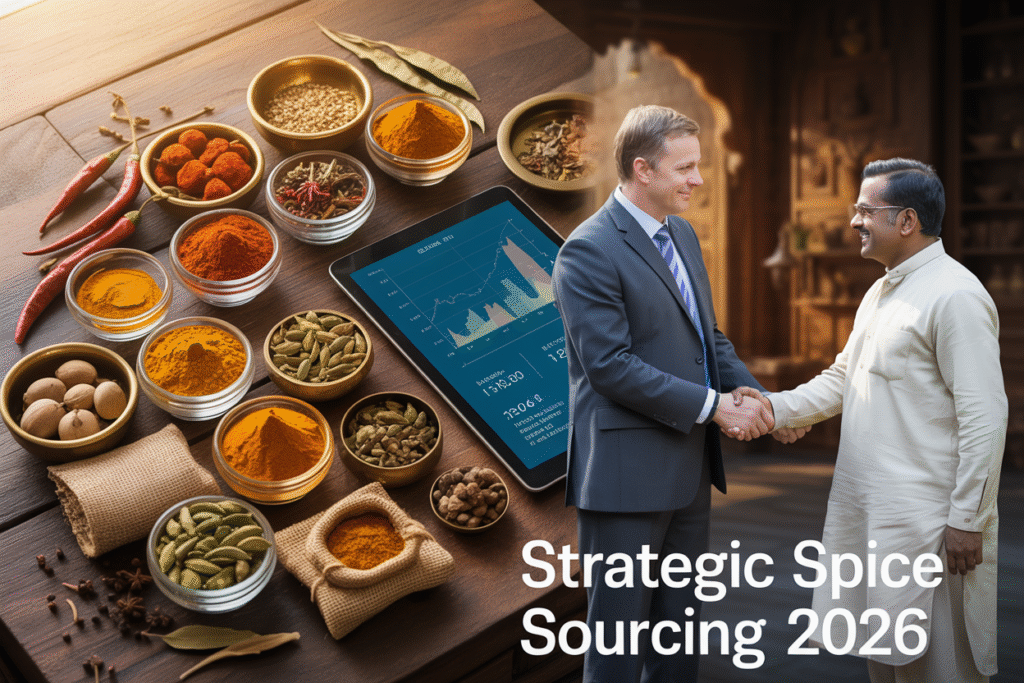
Strategic Spice Sourcing in 2026

Global food manufacturers, distributors, and procurement managers face mounting pressure to secure high-quality spices while managing costs and meeting evolving consumer demands. Strategic spice sourcing has become a critical competitive advantage, especially as spice market trends 2026 point toward increased demand for premium, traceable, and value-added products from established regions like India.
This guide targets international buyers, procurement teams, and food industry executives who need practical strategies for working with Indian spice suppliers. You’ll discover how to build lasting partnerships that go beyond basic wholesale spice procurement and create real value for your business.
We’ll walk through the shifting dynamics of international spice procurement in 2026, including new quality standards and market opportunities that smart buyers are already capitalizing on. You’ll learn proven techniques for spice quality control that protect your brand reputation while streamlining your supply chain operations. Plus, we’ll share actionable approaches for spice supply chain optimization that boost profit margins through strategic sourcing decisions and premium spice sourcing partnerships.
Understanding the 2026 Spice Market Landscape and Emerging Opportunities

Global spice consumption trends driving unprecedented demand growth
The global spice market is experiencing explosive growth that’s reshaping international procurement strategies. Consumer preferences have shifted dramatically toward premium, authentic flavors, with the global spice market projected to reach $19.3 billion by 2026. This surge isn’t just about traditional cooking—it’s driven by the wellness revolution, where consumers actively seek spices for their functional health benefits.
Plant-based diets and ethnic cuisine popularity have created massive opportunities for international buyers practicing strategic spice sourcing. Turmeric, cardamom, and black pepper are no longer just cooking ingredients—they’re positioned as superfood components in supplements, beverages, and functional foods. The demand for organic and sustainably sourced spices has grown by 8.2% annually, creating premium market segments that savvy buyers can capitalize on.
Restaurant chains and food manufacturers are increasingly turning to authentic spice blends to differentiate their products. This trend has created a massive B2B opportunity where quality matters more than rock-bottom pricing, allowing strategic buyers to focus on premium sourcing relationships rather than competing solely on cost.
India’s dominant position as the world’s largest spice producer and exporter
India commands an unmatched 70% share of global spice exports, making partnerships with Indian spice suppliers absolutely critical for international buyers. The country produces over 75 varieties of spices across different agro-climatic zones, offering unparalleled diversity and year-round availability that no other origin can match.
Kerala remains the epicenter for cardamom and black pepper, while Gujarat dominates cumin and fennel production. Tamil Nadu leads in turmeric cultivation, and Karnataka excels in chili varieties. This geographical specialization means international spice procurement strategies must account for regional expertise and seasonal patterns.
| Major Spice | Primary Indian Regions | Export Volume (Annual) |
|---|---|---|
| Turmeric | Tamil Nadu, Andhra Pradesh | 180,000 tons |
| Chili | Andhra Pradesh, Karnataka | 400,000 tons |
| Cumin | Gujarat, Rajasthan | 120,000 tons |
| Cardamom | Kerala, Tamil Nadu | 25,000 tons |
| Black Pepper | Kerala, Karnataka | 60,000 tons |
Indian producers have invested heavily in processing infrastructure, offering everything from whole spices to customized blends and value-added products. This vertical integration gives international buyers access to complete spice supply chain solutions from a single source, reducing complexity and improving quality consistency.
Post-pandemic supply chain transformations creating new sourcing advantages
The pandemic fundamentally changed how spice supply chains operate, creating new advantages for smart international buyers. Direct farmer-to-buyer relationships have become more accessible through digital platforms, eliminating multiple intermediaries and improving both pricing and traceability.
Indian suppliers have embraced technology integration, implementing blockchain tracking systems and digital quality certificates that give international buyers unprecedented visibility into their spice supply chain optimization. Many suppliers now offer real-time inventory tracking, predictive shipping schedules, and automated reorder systems that were unthinkable before 2020.
Consolidation in the shipping industry has actually improved logistics efficiency for spice imports. Container availability and routing have stabilized, making wholesale spice procurement more predictable. Regional consolidation centers in India now offer smaller buyers access to containerized shipping that was previously only available to large importers.
The shift toward nearshoring has also benefited Indian suppliers, as buyers look for reliable, English-speaking partners with established quality systems. This trend has pushed many Indian producers to invest in certifications like FSSC 22000, BRC, and organic certifications that open doors to premium markets.
Technology-driven quality assurance standards reshaping buyer expectations
Modern spice quality control has evolved far beyond basic sensory evaluation. Advanced testing technologies like near-infrared spectroscopy and gas chromatography-mass spectrometry are becoming standard requirements from international buyers. Indian suppliers are responding by investing in sophisticated laboratory equipment and third-party testing partnerships.
Blockchain technology now enables complete traceability from farm to final product, addressing food safety concerns that have become paramount since the pandemic. Smart buyers are leveraging these systems to provide their customers with detailed origin stories and quality documentation that command premium pricing.
Artificial intelligence is revolutionizing spice import strategies through predictive quality analytics. Machine learning algorithms can now predict optimal harvest times, identify potential contamination risks, and optimize storage conditions throughout the supply chain. Progressive Indian suppliers are partnering with tech companies to offer these analytics as part of their service packages.
Real-time moisture monitoring, automated color grading, and spectral analysis for adulteration detection have become competitive advantages rather than nice-to-have features. Buyers who partner with technology-forward suppliers gain access to consistent quality data that supports premium market positioning and reduces the risk of costly recalls or quality failures.
Building Strategic Partnerships with Premium Indian Spice Suppliers
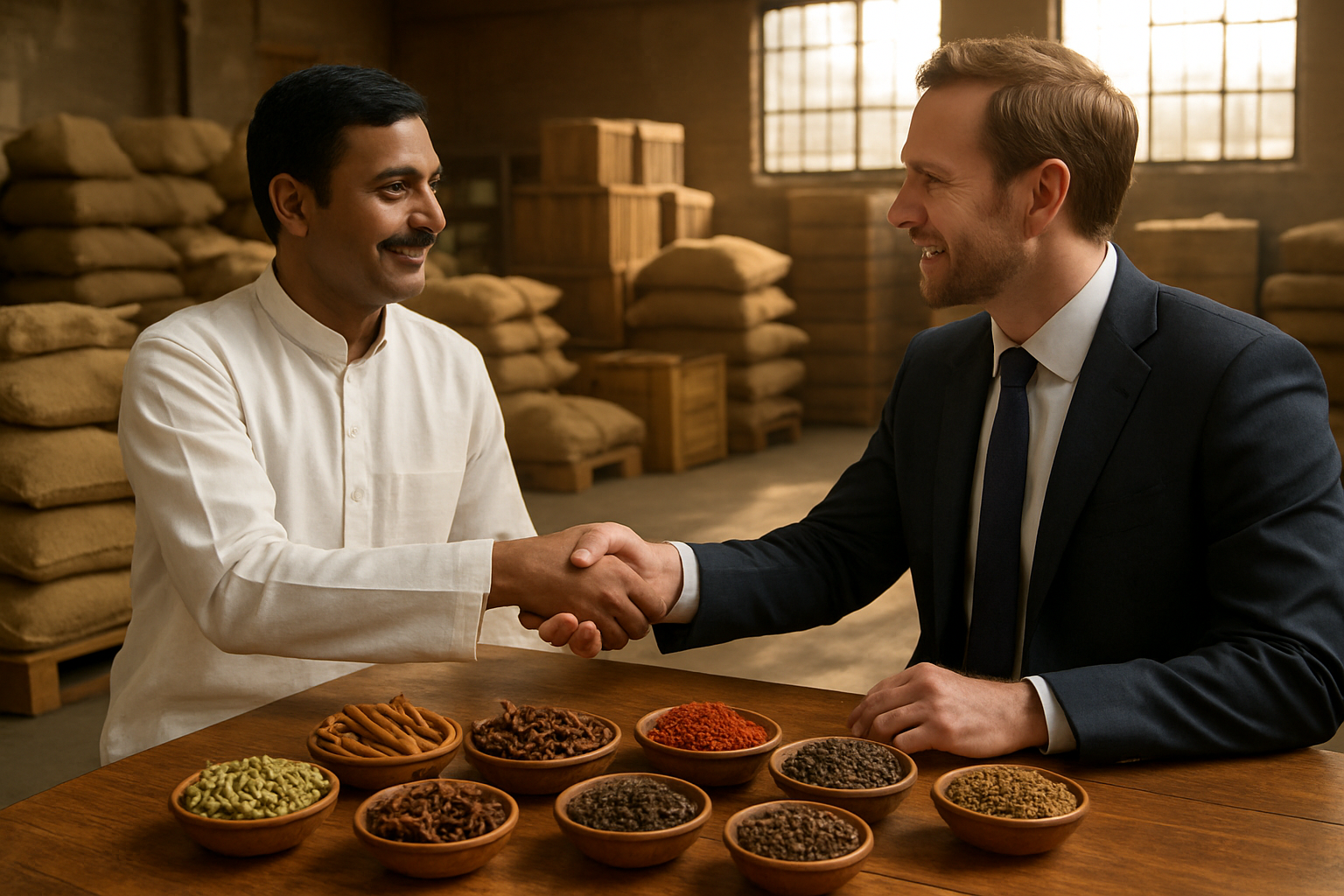
Identifying Tier-One Suppliers with Certified Organic and Sustainable Practices
Success in strategic spice sourcing depends on finding Indian spice suppliers who balance quality, sustainability, and commercial viability. Top-tier suppliers distinguish themselves through comprehensive certification portfolios including USDA Organic, Fair Trade, Rainforest Alliance, and India Organic certifications. These credentials aren’t just paperwork—they represent rigorous farming practices, traceability systems, and ethical labor standards that international buyers increasingly demand.
The best premium spice sourcing partners operate integrated supply chains from farm to processing facility. They maintain direct relationships with farmer cooperatives, ensuring consistent quality control from cultivation through final packaging. Look for suppliers who provide detailed farm-level documentation, including soil health reports, water usage metrics, and pesticide residue testing. Many leading suppliers now offer blockchain-enabled traceability systems that track each batch from specific farm plots to your warehouse.
Geographic specialization matters significantly. Suppliers focusing on specific spice-growing regions often deliver superior quality compared to generalist distributors. For example, Kerala-based suppliers typically excel in cardamom and black pepper, while Gujarat suppliers dominate cumin and coriander markets. Regional specialists understand local climate variations, harvest timing, and traditional processing methods that preserve essential oils and flavor compounds.
Evaluating Supplier Capabilities for Consistent Quality and Scalable Production
Assessing supplier production capacity requires examining both current operations and expansion potential. Strong suppliers demonstrate consistent monthly output volumes, typically processing 100-500 metric tons depending on spice variety. They maintain buffer inventory to handle seasonal fluctuations and unexpected demand spikes without compromising quality standards.
Quality consistency hinges on standardized processing protocols and investment in modern equipment. Evaluate suppliers based on their cleaning, sorting, and grinding capabilities. Advanced facilities use color sorting machines, metal detectors, and automated sieving systems to eliminate foreign matter and ensure uniform particle size. Temperature-controlled storage facilities with humidity monitoring prevent deterioration and maintain optimal moisture content.
Production scalability indicators include:
- Infrastructure capacity: Steam sterilization units, vacuum packaging systems, and cold storage facilities
- Workforce stability: Trained technical staff and seasonal labor management systems
- Financial resources: Working capital for inventory management and equipment upgrades
- Compliance systems: HACCP implementation, third-party auditing, and documentation protocols
Request facility audits and production records covering at least 12 months. Reliable suppliers provide transparent access to their operations and welcome quality inspections from potential partners.
Establishing Long-Term Contracts that Secure Favorable Pricing and Priority Access
International spice procurement benefits significantly from multi-year agreements that protect against price volatility while ensuring supply security. Successful contracts typically span 2-3 years with built-in volume commitments and pricing mechanisms tied to market indices or cost-plus formulas.
Contract negotiations should address seasonal price fluctuations common in spice markets. Many suppliers offer price averaging mechanisms where annual costs reflect weighted averages across multiple harvest periods. This approach smooths out extreme price movements while maintaining fair compensation for suppliers during high-cost periods.
Volume commitments create mutual benefits—suppliers gain predictable revenue streams while buyers secure priority access during tight market conditions. Structure agreements with minimum annual volumes but include flexibility for 15-20% increases without renegotiation. This arrangement accommodates business growth while providing suppliers adequate planning visibility.
Key contract provisions include:
| Component | Buyer Protection | Supplier Incentive |
|---|---|---|
| Quality specs | Detailed parameters with penalty clauses | Bonus payments for exceeding standards |
| Delivery terms | Penalty-free order modifications within 30 days | Volume-based shipping cost sharing |
| Price protection | Caps on quarterly increases | Guaranteed minimum purchase levels |
| Force majeure | Alternative sourcing rights | Shared risk during natural disasters |
Payment terms significantly impact relationship dynamics. Offering 30-day terms instead of standard 60-90 day cycles often secures 3-5% pricing advantages. Some buyers establish revolving credit facilities that suppliers can access for working capital needs, creating deeper partnership bonds while negotiating better wholesale spice procurement rates.
Maximizing Quality Control Through Advanced Sourcing Techniques

Implementing blockchain technology for complete traceability and transparency
Modern international spice procurement demands unprecedented visibility throughout the supply chain. Blockchain technology creates an immutable record of every spice lot from farm to warehouse, giving buyers complete confidence in their strategic spice sourcing decisions. Smart contracts automatically verify compliance with international standards, while digital certificates track organic certifications, fair trade status, and quality grades.
Leading Indian spice suppliers now offer blockchain-enabled tracking that records harvesting dates, processing methods, storage conditions, and transportation details. This technology eliminates documentation fraud and provides real-time access to origin data that international buyers need for regulatory compliance. When quality issues arise, buyers can trace problems back to specific farms or processing facilities within hours instead of weeks.
Leveraging AI-powered quality testing for consistent product specifications
Artificial intelligence transforms traditional spice quality control from reactive to predictive. AI-powered testing systems analyze color consistency, moisture content, oil levels, and contamination risks with precision that human inspection cannot match. These systems learn from historical data to predict quality variations based on seasonal patterns, weather conditions, and supplier performance.
International buyers working with tech-forward Indian spice suppliers gain access to automated grading systems that ensure every shipment meets exact specifications. AI algorithms detect subtle quality variations that could affect flavor profiles or shelf life, allowing buyers to maintain consistent product standards across global markets. Automated testing reduces human error while providing detailed quality reports that support premium pricing strategies.
| Quality Parameter | Traditional Testing | AI-Powered Testing |
|---|---|---|
| Testing Speed | 2-3 days | 2-3 hours |
| Accuracy Rate | 85-90% | 95-98% |
| Cost per Sample | $25-35 | $8-12 |
| Defect Detection | Visual only | Multi-spectral analysis |
Developing robust inspection protocols at origin to minimize rejection rates
Effective spice quality control starts at the source. Establishing comprehensive inspection protocols with Indian spice suppliers prevents quality issues from reaching international markets. Pre-shipment inspections should cover visual appearance, aroma intensity, microbiological safety, pesticide residues, and moisture levels according to destination country requirements.
Smart procurement strategies include mandatory quality checkpoints at multiple stages: raw material intake, processing, packaging, and final shipment. Third-party inspection services provide unbiased quality verification, while supplier training programs ensure consistent adherence to international standards. Digital documentation of each inspection creates accountability and supports continuous improvement initiatives.
Regular audits of supplier facilities identify potential quality risks before they impact shipments. Buyers should establish clear rejection criteria and financial penalties for non-compliance to maintain quality standards. Collaborative quality improvement programs help Indian suppliers upgrade their processes to meet evolving market demands.
Creating quality scorecards that align supplier performance with market premiums
Quality scorecards transform subjective assessments into objective performance metrics that drive supplier accountability. These scorecards track key indicators like defect rates, delivery timeliness, documentation accuracy, and compliance with specifications. Weighted scoring systems reflect the relative importance of different quality parameters for specific spice categories and target markets.
Premium pricing tiers linked to quality scorecards incentivize Indian spice suppliers to exceed baseline requirements. Top-performing suppliers earn access to long-term contracts and premium orders, while underperforming suppliers face reduced order volumes or contract termination. Transparent scoring systems create healthy competition among suppliers and drive continuous quality improvements.
Monthly scorecard reviews provide opportunities for collaborative problem-solving and process optimization. Buyers can share market feedback with suppliers to help them understand quality expectations and adjust their operations accordingly. Data-driven performance management strengthens supplier relationships while protecting profit margins through consistent quality delivery.
Optimizing Profit Margins Through Smart Procurement Strategies
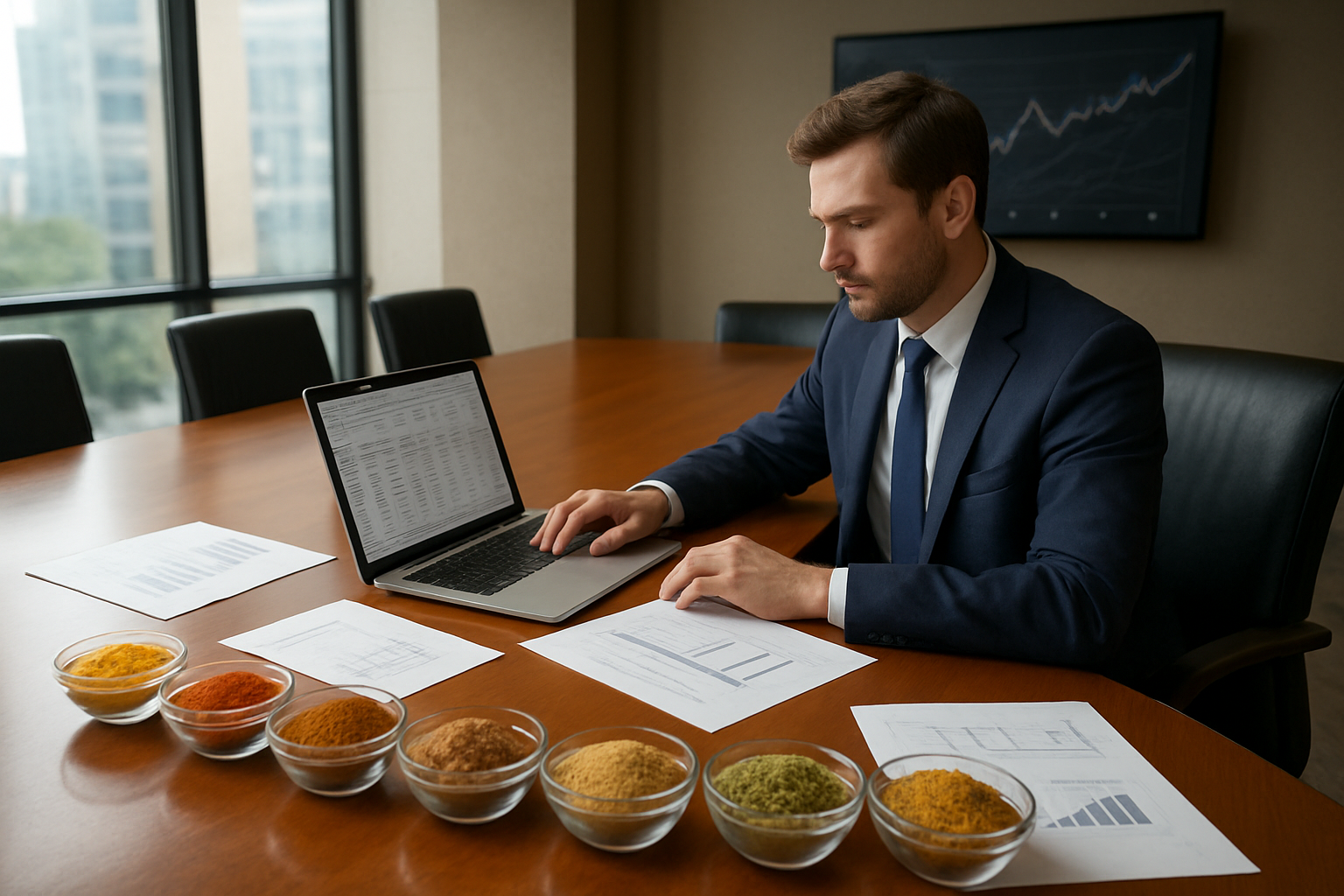
Timing purchases to capitalize on seasonal price fluctuations and harvest cycles
Smart international spice procurement hinges on understanding India’s diverse agricultural calendar. Turmeric prices drop dramatically during harvest season (January-March), offering 20-30% savings compared to off-season purchases. Black pepper follows a similar pattern with peak harvest in December-February, while cardamom reaches its lowest prices during October-December harvest.
Savvy buyers create procurement calendars aligned with these cycles. For instance, purchasing red chilies during March-May harvest periods can reduce costs by up to 40%. The key lies in forecasting annual requirements and securing storage capacity to buy large quantities during favorable windows.
Regional variations matter significantly. Kerala’s spice harvest differs from Karnataka’s timeline, and weather patterns can shift these cycles. Building relationships with Indian spice suppliers across multiple regions provides flexibility to capitalize on the best opportunities regardless of local variations.
Negotiating volume-based pricing tiers that reduce per-unit costs significantly
Volume commitment unlocks substantial cost advantages in Indian spice suppliers partnerships. Most premium suppliers offer tiered pricing structures that reward larger orders with progressively better rates.
| Annual Volume (MT) | Discount Tier | Typical Savings |
|---|---|---|
| 10-25 | Bronze | 5-8% |
| 25-50 | Silver | 10-15% |
| 50-100 | Gold | 18-25% |
| 100+ | Platinum | 25-35% |
Strategic spice sourcing requires balancing volume commitments with inventory carrying costs. Smart buyers negotiate minimum quarterly orders instead of massive annual purchases, maintaining cash flow while securing volume pricing. This approach works particularly well for high-value spices like saffron, black cardamom, and premium vanilla.
Co-op buying presents another opportunity. Smaller importers can band together to reach higher volume tiers, sharing both costs and benefits. Several European spice importers successfully use this model to compete with larger players.
Eliminating intermediary markups through direct farmer-to-buyer relationships
Traditional spice supply chains involve multiple intermediaries, each adding 15-25% markup. Direct sourcing from farmer cooperatives or spice estates eliminates these layers, creating win-win scenarios where farmers receive better prices while buyers reduce costs.
India’s spice growing regions offer different direct sourcing opportunities:
- Kerala: Cardamom and pepper estates welcome direct buyers
- Tamil Nadu: Turmeric farmer cooperatives provide quality consistency
- Rajasthan: Cumin and coriander grower associations offer bulk contracts
- Karnataka: Organic spice collectives focus on premium markets
Building these relationships requires time investment and cultural understanding. Successful buyers often partner with local agents initially, gradually developing direct connections. Technology platforms now connect international buyers with Indian spice suppliers directly, streamlining this process.
Quality control becomes more complex in direct relationships, requiring robust testing protocols and clear specifications. However, the cost savings often justify the additional oversight needed.
Currency hedging strategies to protect against exchange rate volatility
INR/USD fluctuations can dramatically impact wholesale spice procurement profitability. A 10% currency swing translates directly to margin changes, making hedging essential for serious international spice procurement operations.
Forward contracts work well for planned purchases with known timing. Buyers can lock in favorable rates 3-6 months ahead, protecting against adverse movements. Options strategies provide insurance while maintaining upside potential if currency moves favorably.
Natural hedging offers another approach. Buyers selling to multiple markets can match currency exposures – using EUR revenues to fund INR purchases, for example. This strategy works particularly well for value-added spice products sold across diverse markets.
Payment timing flexibility provides tactical opportunities. Quick payment terms often earn 2-3% discounts from Indian spice suppliers, sometimes offsetting currency risks entirely. Letters of credit, while more expensive, provide certainty for both parties in volatile periods.
Regular monitoring of economic indicators helps predict currency trends. India’s monsoon patterns, political developments, and global commodity prices all influence INR movements, providing early warning signals for strategic adjustments.
Accelerating Market Growth with Value-Added Spice Products
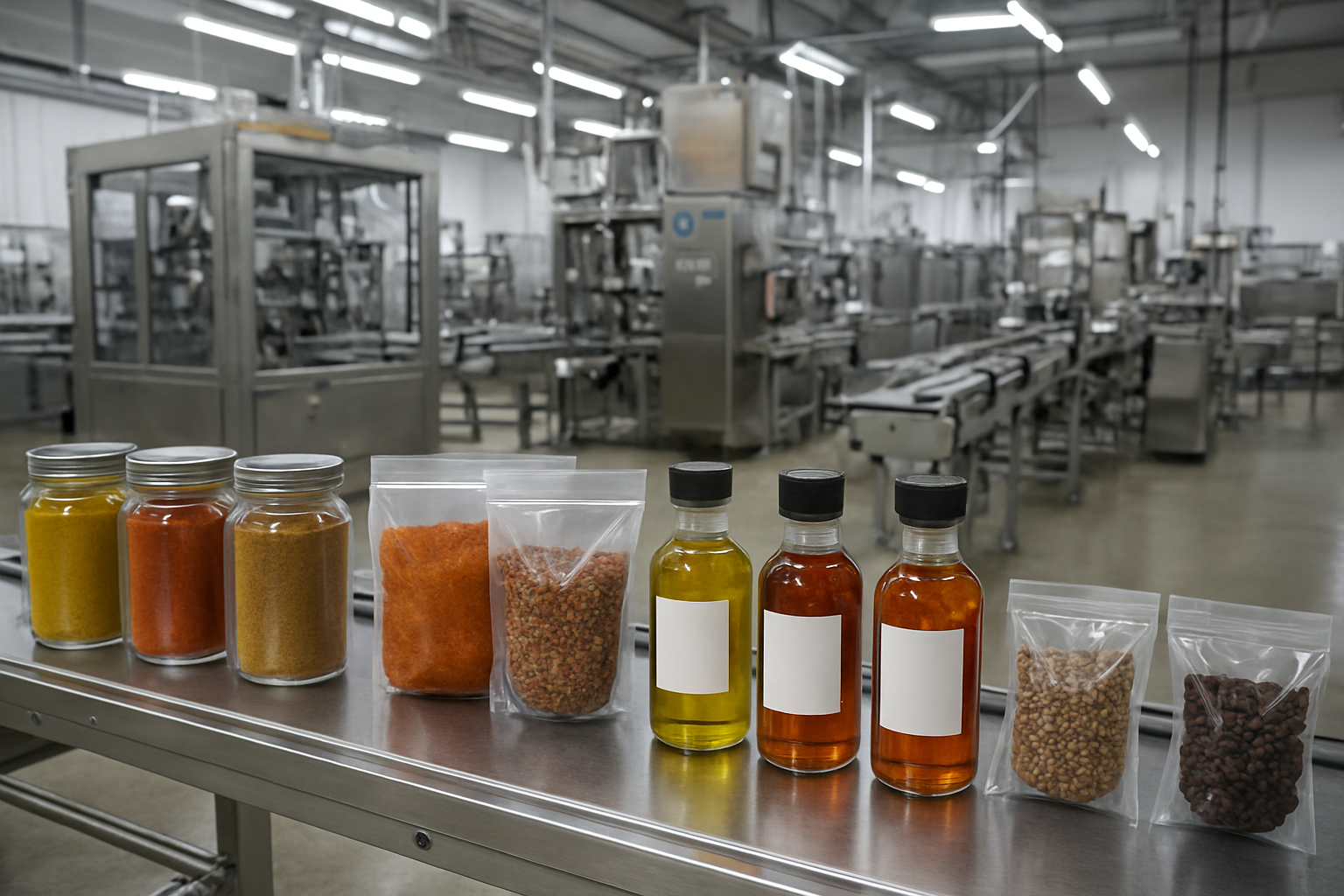
Developing Custom Spice Blends That Command Premium Pricing in Target Markets
Creating signature spice blends opens doors to higher profit margins and stronger market positioning. Smart international buyers partner with Indian spice suppliers who understand regional taste preferences and can craft unique blends that resonate with local consumers. These custom formulations become proprietary assets that competitors can’t easily replicate.
Working closely with experienced Indian suppliers allows you to develop blends that reflect authentic regional cooking traditions while meeting modern consumer demands. Whether it’s a Mediterranean-inspired herb mix or an Asian fusion seasoning, the key lies in balancing traditional spice knowledge with market insights.
Successful custom blend development requires clear communication about target price points, shelf life requirements, and packaging specifications. Your Indian suppliers should provide detailed cost breakdowns and suggest ingredient substitutions that maintain flavor profiles while optimizing margins.
Creating Private Label Opportunities That Increase Brand Loyalty and Margins
Private labeling transforms commodity spice purchases into branded experiences that generate customer loyalty. International buyers can leverage their relationships with Indian spice suppliers to create exclusive product lines that strengthen brand identity and command premium prices.
The private label approach works best when you collaborate with suppliers who offer comprehensive services beyond just spice sourcing. Look for partners who provide custom packaging solutions, nutritional analysis, and regulatory compliance support for your target markets.
Building strong private label programs requires consistent quality standards and reliable supply chains. Your Indian suppliers should demonstrate their ability to maintain exact specifications across multiple production runs while scaling up or down based on market demand.
Expanding Into Organic and Specialty Spice Categories With Higher Growth Potential
Organic and specialty spices represent some of the fastest-growing segments in international markets. Strategic spice sourcing in these categories requires partnering with Indian suppliers who maintain certified organic operations and understand the documentation requirements for various international markets.
The specialty spice market includes exotic varieties, single-origin products, and artisanal processing methods that appeal to food enthusiasts and professional chefs. These products typically carry margins 30-50% higher than conventional spices.
Key specialty categories showing strong growth include:
- Single-estate spices with traceable origins
- Ancient grain and seed spices
- Smoked and fire-roasted varieties
- Cold-pressed spice oils and extracts
- Heritage variety spices from specific regions
Success in specialty categories depends on storytelling and authenticity. Your Indian suppliers should provide detailed origin stories, processing methods, and quality certifications that support premium positioning.
Building Consumer Education Programs That Drive Category Expansion and Repeat Purchases
Educational initiatives create informed consumers who appreciate quality differences and become willing to pay premium prices. International buyers who invest in consumer education alongside their Indian spice suppliers see higher customer retention rates and increased average order values.
Effective education programs include recipe development, cooking technique demonstrations, and health benefit communications. Your suppliers can provide cultural context and traditional usage information that adds authenticity to these programs.
Digital platforms make consumer education more accessible and measurable. Consider developing content partnerships with food bloggers, cooking schools, and health-focused influencers who can showcase the unique properties of your spice products.
Successful education programs create a virtuous cycle where informed consumers seek out higher-quality products, enabling you to command premium pricing while building long-term customer relationships that support sustainable business growth.

The spice industry in 2026 presents incredible opportunities for international buyers who know how to play their cards right. By understanding market trends, building strong relationships with trusted Indian suppliers, and implementing smart quality control measures, you can set your business up for serious success. The key lies in moving beyond basic procurement to create strategic partnerships that deliver premium products while keeping your margins healthy.
Your next step should be putting these sourcing strategies into action. Start by identifying reliable Indian suppliers who share your commitment to quality, then work on developing long-term partnerships that benefit both sides. Don’t forget to explore value-added products that can help you stand out in competitive markets. The spice trade is evolving rapidly, and the buyers who adapt their sourcing approach now will be the ones capturing the biggest slice of growth in the years ahead.